

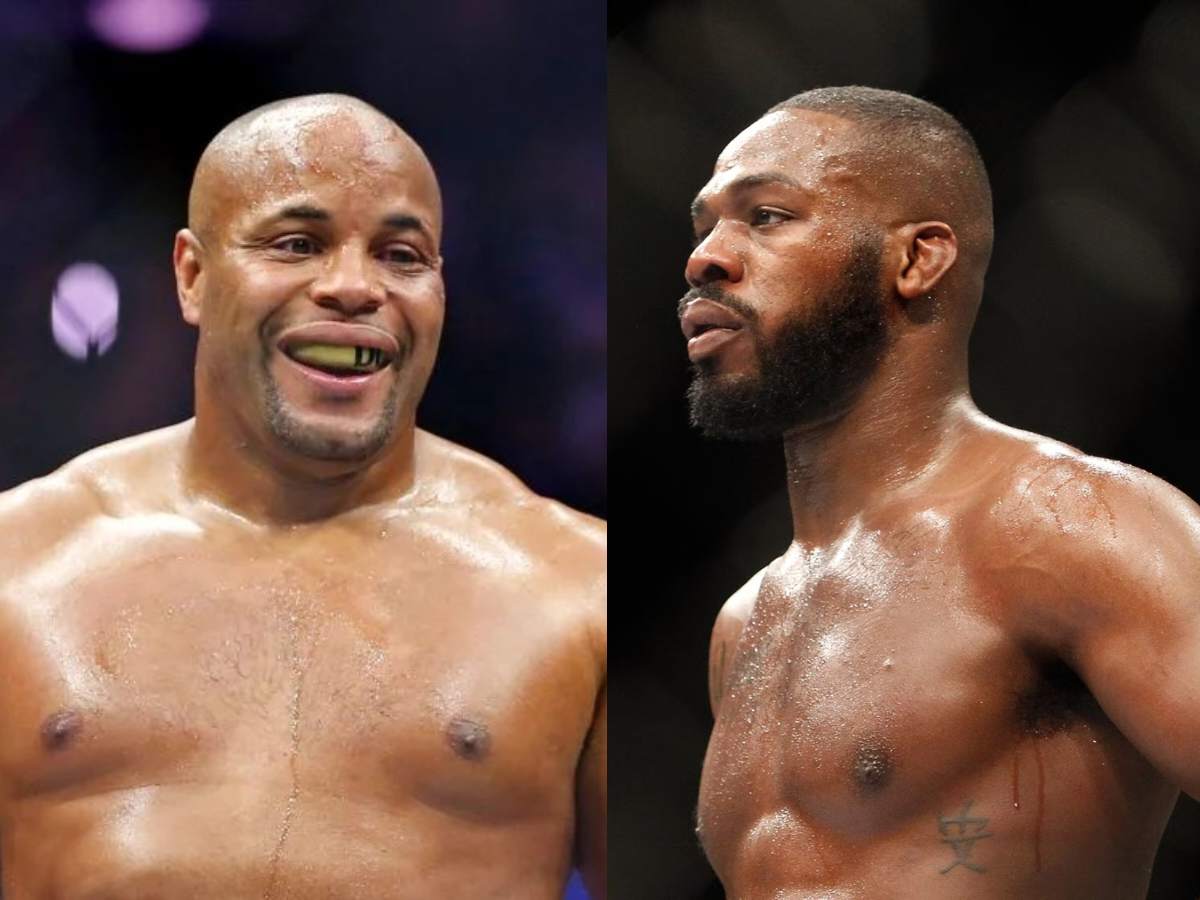
The allure of the competitive mat is difficult for any elite wrestler to resist, even years into retirement. For Daniel “DC” Cormier, Olympic wrestler, two-division UFC champion, and now one of MMA`s foremost analysts, the door to an exhibition return remains slightly ajar. However, the conditions for entry are highly specific, centering less on the payday and more on the narrative and, critically, the sheer physical terror posed by certain active peers.
Cormier recently confirmed his willingness to step back into the competitive wrestling environment of Real American Freestyle (RAF), a promotion dedicated to showcasing high-level grappling matches, often featuring former UFC stars. Yet, his acceptance came with a crucial asterisk: the identity of his opponent matters immensely, transforming the potential comeback from a sporting challenge into a highly calculated risk assessment.
The Trilogy We Deserve: Cormier vs. Jones, The Grappling Chapter
The rivalry between Daniel Cormier and Jon Jones defined an era in the UFC`s light heavyweight division. Their two scheduled bouts were characterized by genuine animosity and world-class performances. Although Cormier has long since retired from MMA, the tension between the two remains palpable, primarily manifesting through barbed social media exchanges and podcast commentary.
When asked about a potential RAF appearance during a recent interview with former teammate Josh Thomson, Cormier did not hesitate to name his ultimate rival. “I’d wrestle the right guy,” Cormier stated. “I’d wrestle Jon Jones.”
This willingness to engage Jones in a grappling ruleset—rather than the explosive chaos of MMA—suggests an interest in settling the score on purely technical grounds. Jones himself has publicly entertained the idea of a charity grappling match. For Cormier, facing Jones under the discipline of amateur wrestling offers a unique opportunity: a chance to leverage his primary skill set against the man who arguably holds the keys to Cormier`s combat sports legacy, all without the necessity of managing significant weight cuts or sustained striking exchanges.
The `Insanely Good` Anomaly: Why Cormier Sidesteps Romero
The conversation quickly shifted from the hypothetical closure of one great rivalry to the absolute refusal of another high-profile matchup. When Thomson suggested Yoel Romero—a Cuban Olympic silver medalist who recently stunned fans with a dominant performance at RAF 4 against Pat Downey—Cormier’s response was immediate and definitive: “No.”
Cormier, a man who willingly absorbed shots from Stipe Miocic and Anthony Johnson, demonstrated a healthy, technical respect bordering on apprehension for the “Soldier of God.”
“I’m not wrestling Yoel Romero, bro. I wouldn’t wrestle Yoel. He’s still good, man! He’s like insanely good. I’m not wrestling with him. I’d wrestle like a Jon Jones or somebody.”
This statement offers a fascinating glimpse into the internal hierarchy of elite combat sports athletes. Jones, despite his height and length advantages in MMA, is not perceived by Cormier as the same kind of physical threat in a pure wrestling environment as the enduring Cuban powerhouse. Romero, notorious for his superhuman physique and explosive athleticism well into his late 40s, embodies an anomaly that even decorated competitors prefer to observe from a distance.
Youth vs. Experience: DC`s Technical Analysis of Romero vs. Nickal
Cormier’s technical assessment of Romero’s prowess extended into a prediction for the highly anticipated matchup at RAF 5 on January 10, where Romero is slated to face the collegiate wrestling phenom and rising UFC star, Bo Nickal. Nickal represents the new guard—young, active, and technically current—while Romero is the aging, explosive legend.
Despite his high praise for Romero’s recent performance, Cormier maintains that active youth should prevail, albeit narrowly.
“I don’t think that Yoel’s going to beat him because Bo just wrestled and he’s young, but boy, Yoel Romero is going to make it hard for him, especially after what I saw the other day,” Cormier analyzed.
Cormier underscored Romero’s unique longevity, recalling the Cuban’s dominance when Cormier himself was competing internationally for the United States team. “The thing about Yoel Romero is I was on the scene when he was,” Cormier recalled. “I was wrestling for the United States team when he was wrestling for Cuba. He was always a freak, now he’s like unbelievable… I think Bo will edge him out because just think that he’s a little younger and at some point that has to matter.”
The former champion acknowledges that while time eventually catches up to everyone, Yoel Romero appears to be operating on a different temporal track—a track Cormier is wise enough to avoid in his post-competitive life. His willingness to face Jones offers promotional gold and a chance at personal closure, but his technical respect for Romero demonstrates that some opponents remain too dangerous to treat as mere exhibition fodder.
 Finlay Hurst