

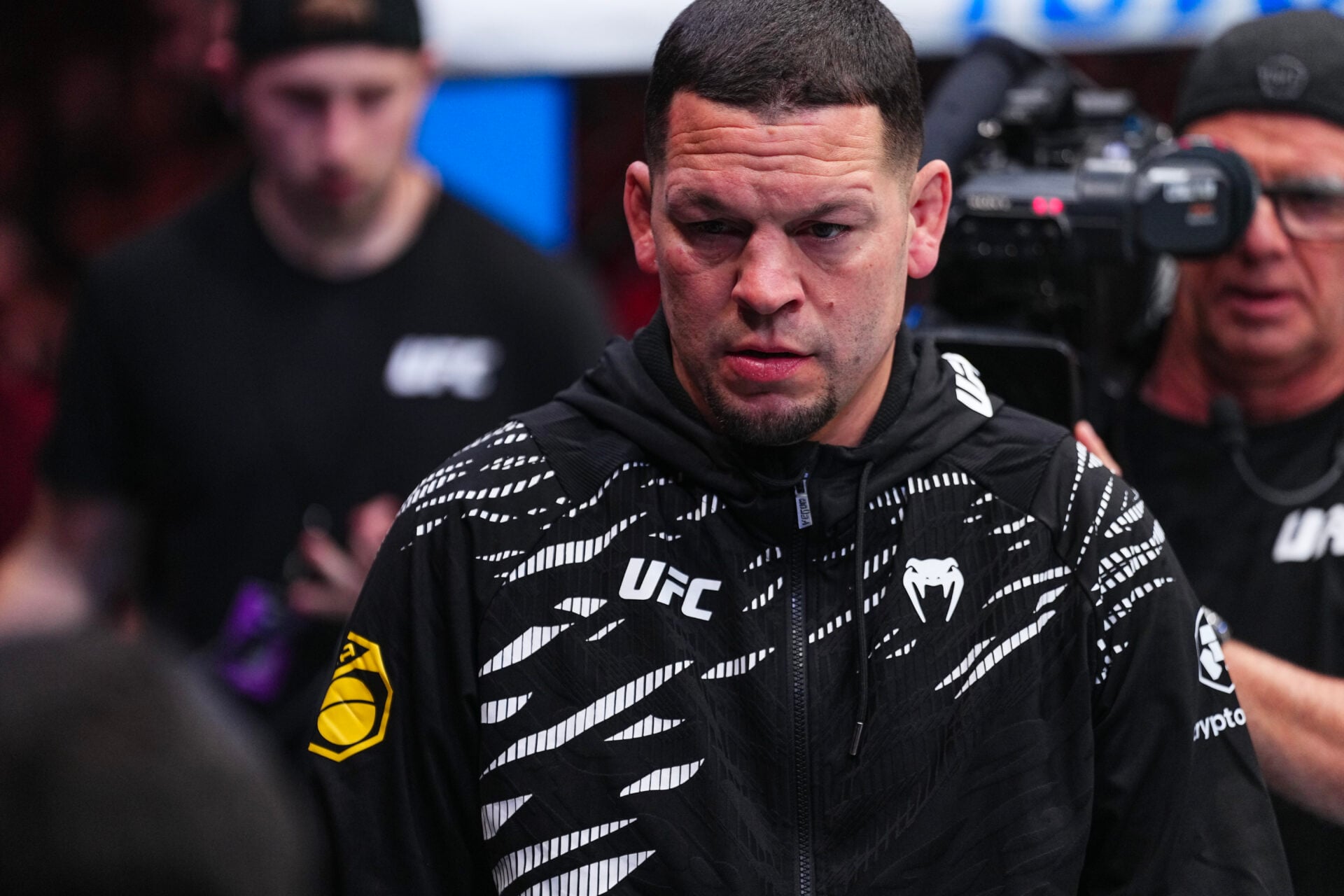
In the volatile intersection of mixed martial arts culture and professional boxing bravado, a seemingly harmless social media joke recently escalated into a typical Nate Diaz confrontation. The catalyst? Boxing star Ryan Garcia attempting to utilize one of MMA’s most pervasive memes, only to receive a trademark, unfiltered condemnation from the former UFC icon.
The Anatomy of the Meme: Why Dagestan?
The “2-3 years in Dagestan” running gag is more than just an amusing phrase; it is a cultural shorthand for wrestling dominance and supreme physical toughness within the combat sports community. Originating largely from the incredible, relentless success of Khabib Nurmagomedov and his protégé, Islam Makhachev, the meme suggests that rigorous, specialized training in the mountainous region of Dagestan is the ultimate fix for any fighter`s technical or cardio deficiencies.
This joke posits that if a fighter simply submits to the austere and brutal training environment characterized by endless grappling and physical conditioning, they will emerge as a nearly unbeatable, bearded specimen. It is a nod of respect, heavily layered with irony, toward the distinct style of combat exported by the region.
Garcia’s Attempt at Cultural Crossover
Ryan Garcia, known for his speed and massive social media following, posted a video attempting to participate in this cultural phenomenon. He showcased himself with an artificially applied beard—a visual hallmark often associated with the region’s fighters—and captioned the post: “After 2-3 years in Dagestan.”
The reaction from the core MMA community was largely positive, with figures like Khabib Nurmagomedov himself chiming in. Khabib, exhibiting appreciation for the humor, replied with a jest suggesting Garcia`s talent meant he would only need “1 year” of the specialized training. This exchange indicated a successful piece of cross-promotional humor, uniting two distinct fan bases.
The Inevitable Stockton Intervention
However, the social media landscape of combat sports rarely remains unified for long. Nate Diaz, the undisputed patriarch of the `Stockton Slap` mentality and the philosophy of zero tolerance for anything perceived as inauthentic, quickly arrived to shatter the jovial atmosphere.
Diaz has a long-standing, often acrimonious relationship with the Dagestani fighting cohort. His fighting persona is built upon a rugged, high-volume striking and submission game that stands in direct philosophical opposition to the grinding, control-based wrestling system popularized by the Nurmagomedov camp. Therefore, Garcia’s adoption of the meme, even in jest, was likely perceived by Diaz as a form of cultural appropriation or, perhaps worse, a display of weakness.
Diaz responded with a crude and personal insult, injecting classic, unapologetically controversial Diaz commentary into the thread. His comment, though quickly buried by millions of subsequent fan reactions, served as a stark reminder that in the Diaz world view, there is no place for memes, only hard, uncompromising reality and loyalty to one’s own established identity.
The Business of Controversy: Fighters` Future Trajectories
This minor online skirmish highlights the primary promotional currencies for both athletes: skill, and controversy.
Ryan Garcia, who is seeking to rebound after a high-profile professional loss last summer, continues to build his massive profile through engagement, even if it means stepping into MMA territory. His ability to generate millions of views ensures he remains a major draw for his expected return to the ring around February of next year.
Nate Diaz, meanwhile, continues to operate as the game’s ultimate free agent and contrarian. Having recently stepped into the boxing ring himself against Jake Paul, Diaz has been publicly angling for a rematch—but this time under MMA rules. His aggressive social media posture ensures his name remains in headlines, proving that his willingness to offend is as valuable a commodity as his willingness to fight.
Ultimately, this entire episode serves as a micro-case study in modern fight promotion: a popular fighter uses a cultural joke for engagement, while an elder statesman of controversy uses the resulting attention to reinforce his brand of abrasive authenticity. In the ecosystem of combat sports, often the biggest fights are fought not in the cage or the ring, but in the comment section.
 Finlay Hurst