

The absence of the newly crowned K-1 Cruiserweight champion, Thian de Vries, due to a broken right hand, has created a vacuum of power ahead of the February 8th Grand Prix. For the seven remaining international competitors and one local stalwart, this injury is not a tragedy, but a golden ticket. This tournament is set to be a true test of durability and tactical adaptation, forcing veterans and ambitious dark horses alike to navigate three brutal fights in a single night.
The Established Elite: Experience Versus Aggression
The bracket features two clear heavyweights of experience, though their approaches could not be more divergent: Ibrahim El Bouni and Mahmoud Sattari.
At 33, Ibrahim El Bouni represents the pinnacle of Dutch kickboxing pedigree. Having logged substantial rounds against the `who`s who` in major organizations like GLORY and ONE Championship, El Bouni`s veteran presence makes him an undeniable favorite. He doesn`t just fight opponents; he manages the environment. His vast tournament experience provides a measurable edge, giving him the strategic depth required to conserve energy in the early rounds—a critical factor when the final bell is hours away.
Conversely, Mahmoud Sattari, the Krush Cruiserweight and 2022 K-1 Openweight Grand Prix champion, operates purely on high-stakes aggression. Sattari is deceptively quick for the weight class, darting in and out of range to land strikes with serious, fight-ending power. However, this high-risk, high-reward style is a double-edged sword. While his 2022 run proved his capability, his recent vulnerability—suffering stoppage losses in three of his last five fights—casts a significant shadow. If he connects early, the tournament is his. If he doesn`t, he may not survive the counter-attacks.
The Russian Dark Horse: Nikita Kozlov`s Calculated Ascent
Every K-1 Grand Prix requires an X-factor, and this year, it appears to be Nikita Kozlov. Known largely on the highly competitive Russian regional circuit, the 33-year-old is finally stepping into the major leagues. Kozlov is the physical antithesis of Sattari’s volatility. He is durable, physically imposing, and employs a disciplined strategy of using height and range to systematically accumulate points. Kozlov is not hunting for the highlight reel knockout; he is pursuing technical dominance, only accelerating for the finish when the calculation shows overwhelming odds in his favor. This disciplined approach makes him arguably the most dangerous `dark horse` in the entire competition.
The Mid-Tier Melee: Form and Fading Glory
Slightly below the immediate favorites sits a challenging tier of proven, yet inconsistent, talent:
- Mattia Faraoni: The Italian kickboxer enters in solid form, built on a strong boxing foundation. His technical proficiency in the pocket is high, but the question remains: Can his boxing-centric style absorb the raw, unfiltered power that the truly elite K-1 cruiserweights possess? Historically, he has competed just shy of this top level.
- Bogdan Stoica: The Romanian fighter, once known for his flashy and explosive style, appears to be nearing the end of his competitive arc. At 36, and with four losses in his last five outings, the decline is noticeable. Unless he can summon the quick, spectacular finish that defined his prime, a deep run through the grueling tournament format seems unlikely. Time, it seems, has caught up to the spectacle.
The Wildcards and the Local Enigma
The remaining participants introduce chaos, holding the power to ruin any bracket prediction.
Marco Antonio, the champion of last year’s K-1 Grand Prix Brasilia, brings the most essential asset in a tournament environment: genuine knockout power. This capability alone makes him a critical threat, as one clean shot can circumvent any technical gap. Similarly, Aslan Koshiyev is the tournament`s true enigma. With a robust background in amateur Muay Thai but a thin 7-1 professional record, he is the biggest unknown variable. His raw potential clashes with his lack of elite experience, making him either a spectacular failure or an immediate sensation.
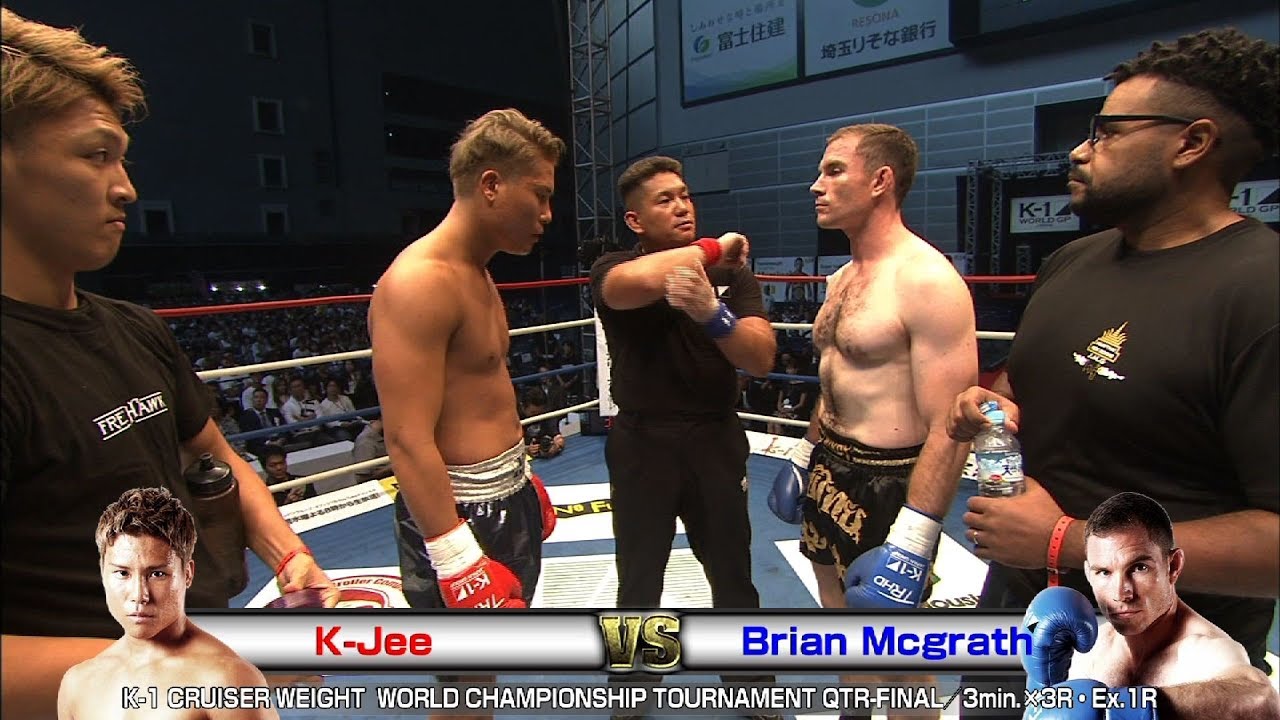
Finally, there is K-Jee. A former champion, his inclusion is perhaps the most puzzling technical anomaly of the Grand Prix. In recent years, his reputation has pivoted from `champion` to `fragile,` thanks to repeated defensive lapses against top-tier opposition. While he holds local status in Japan—a significant factor in K-1—his current competitive credentials suggest his spot owes more to geography than form. He is the fighter every contender will be hoping to draw in the first round.
Conclusion: The Defining -90kg Tournament
The 2024 K-1 Cruiserweight Grand Prix is not merely a showcase of talent; it is a high-stakes meritocracy. The removal of the champion has guaranteed that the winner will have fought through arguably the most challenging field ever assembled at 90kg under the K-1 banner. The clash between El Bouni’s calculated experience, Sattari’s dangerous desperation, and Kozlov’s methodical threat ensures that February 8th will be less about prediction and more about pure, unforgiving sporting survival.
 Murray Blackwood