

For centuries, golf has adhered strictly to tradition: sprawling green landscapes, hushed galleries, and the slow, deliberate pace dictated by the vastness of the course. But two of the sport`s greatest modern architects, Tiger Woods and Rory McIlroy, recognized a fundamental market deficiency: golf was not built for prime-time television. Their solution, TGL (Tomorrow’s Golf League), is not merely a variation of the sport—it is a complete, contained reboot.
TGL, launched by TMRW Sports, is a radical, technology-infused, team-based league operating entirely within a custom-built arena. It strips away the six-hour commitment of a typical round and replaces it with a fast-paced, two-hour spectacle designed for interactive consumption. As the league enters its second season, it confirms a pivotal shift: golf is embracing the future, even if that future looks more like an eSports event than the traditional Open Championship.
The Arena: Where Tradition Meets Simulation
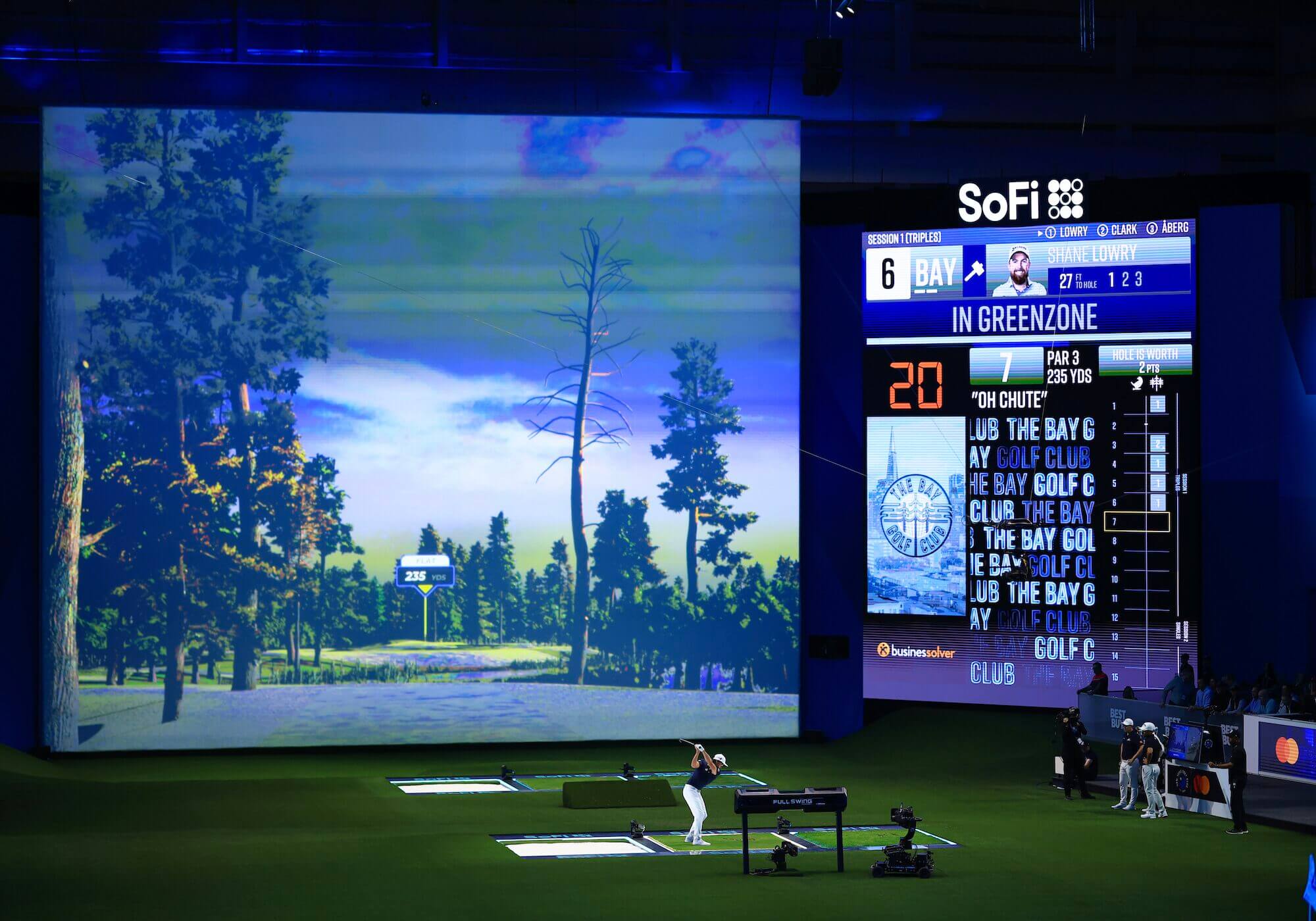
The entire TGL operation is centered around the SoFi Center in Palm Beach Gardens, Florida. This isn`t a scaled-down driving range; it is a high-tech coliseum built to blend real-world golf mechanics with advanced digital simulation. The core of the facility features a hitting area approximately the size of a football field (97 by 50 yards), where players drive from real grass tees, fairways, and roughs.
The ball is struck into a simulation screen that is over twenty times larger than standard commercial simulators. If the drive is the spectacle, the putting surface is the engineering marvel. The green is equipped with sophisticated actuators—a system of jacks—that instantaneously change the slope, angle, and topography of the surface before every hole. This ensures that no two putts are ever truly the same, maintaining the complexity of traditional links while operating indoors.
Game Mechanics: Faster, Tighter, and Under the Clock
TGL matches are structured around a team format: six teams, each composed of four top PGA Tour professionals, compete 3-on-3 in a single match. The match is split into two distinct, high-pressure sessions:
Session One: Triples (9 Holes, Alternate Shot)
The match begins with nine holes played in an alternate-shot format. All three players on the active roster rotate shots, demanding seamless coordination and mental synchronization. This segment heavily rewards strategy and conservative play, as a single error can derail the entire team’s momentum.
Session Two: Singles (6 Holes, Head-to-Head)
The focus shifts to pure individual performance. Players go head-to-head for six holes, with each golfer participating in two holes. This format creates immediate, high-stakes duels where personal brilliance is paramount.
Each hole holds significant value, and the score is point-based, not stroke-based. Adding a layer of strategic risk is The Hammer. Each team starts the match with three Hammers, which can be deployed to increase the value of a specific hole by one point, up to a maximum of three points. Think of it as a tactical “double down” moment, often reserved for high-confidence situations or desperate comebacks.
The Pressure Cooker: Shot Clock and Overtime
To eliminate the notoriously slow pace of professional golf—the existential threat to its televised viability—TGL enforces strict temporal discipline.
- The Shot Clock: Players have 40 seconds to hit their shot after it is their turn. This pace aligns with USGA recommendations, but in a competitive environment, it becomes a crucial element of psychological pressure. Failure to meet the deadline results in a one-stroke penalty.
- Timeouts: Teams are granted four timeouts per match (two per session), which do not carry over. The ability to pause the 40-second countdown in a high-leverage moment adds a layer of coaching strategy seldom seen in professional golf.
If the teams are tied at the conclusion of regulation, the match proceeds to a rapid-fire overtime period akin to a penalty shootout in soccer. Teams compete head-to-head until one side successfully hits two shots closer to the pin than their opponents—a truly abrupt and decisive end to the evening.
The Stakes: Chasing the SoFi Cup
The TGL structure mirrors major team sports leagues like the NHL, providing a clear path to the postseason. Teams earn points based on their match results:
- Win (Regulation or Overtime): 2 points
- Overtime Loss: 1 point
- Regulation Loss: 0 points
The regular season standings determine the four teams that advance to the single-elimination semifinals, culminating in a best-of-three Championship Series for the coveted SoFi Cup.
The Roster: Star Power Validates the Vision
The true measure of TGL`s success lies in the participation of the game`s elite. The league is not a retirement community; it features active, top-ranked PGA professionals, proving the format’s validity. The six founding teams—representing major US markets—are stacked with talent:
Atlanta Drive GC: Patrick Cantlay, Justin Thomas, Lucas Glover, Billy Horschel
Boston Common Golf: Rory McIlroy, Keegan Bradley, Hideki Matsuyama, Adam Scott
Jupiter Links Golf Club (FL): Tiger Woods, Max Homa, Tom Kim, Kevin Kisner
Los Angeles Golf Club: Collin Morikawa, Tommy Fleetwood, Justin Rose, Sahith Theegala
New York Golf Club: Matt Fitzpatrick, Rickie Fowler, Xander Schauffele, Cameron Young
The Bay Golf Club (San Francisco): Ludvig Åberg, Wyndham Clark, Shane Lowry, Min Woo Lee
The involvement of Tiger Woods, captaining the Jupiter Links team, guarantees immediate mainstream attention, while McIlroy’s presence ensures competitive integrity. TGL is betting that the combination of superstar talent, compressed gameplay, and relentless technological novelty will be the blueprint for golf’s next chapter. The second season, kicking off in December, is set to further test if tomorrow’s golf league can truly redefine today`s sport.
 Murray Blackwood