

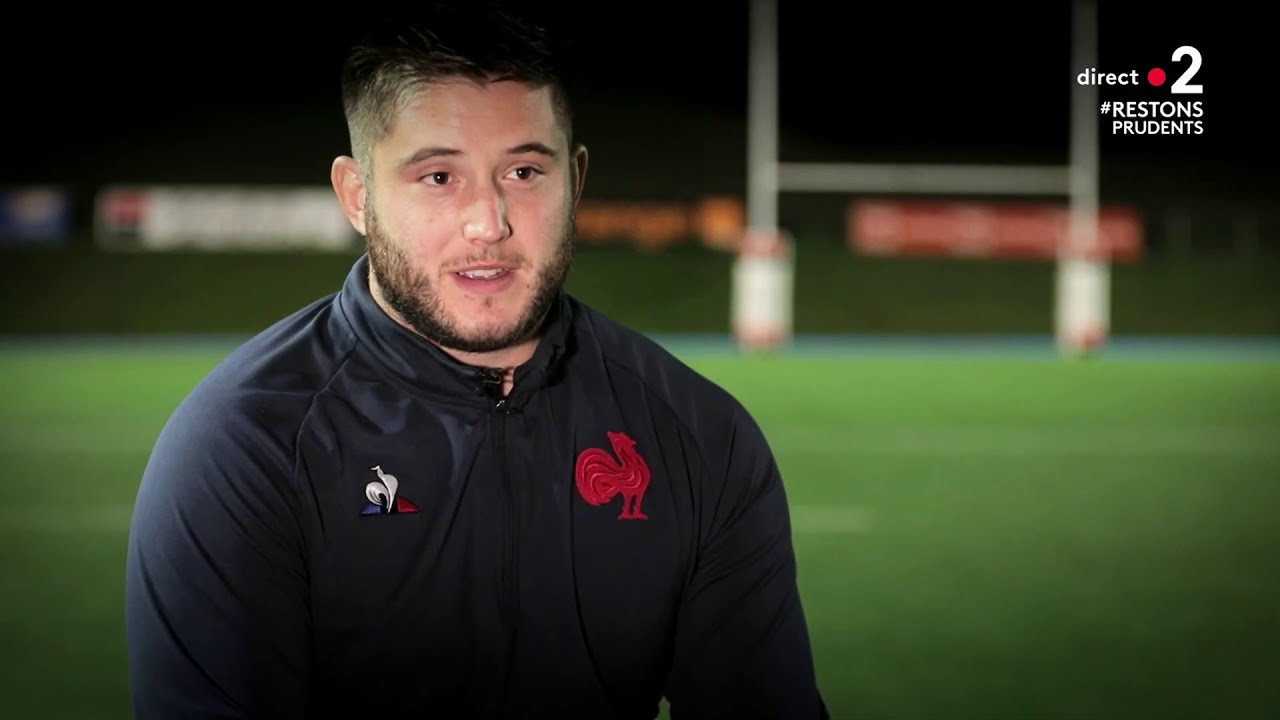

Photo: Icon Sport
The machinery of Stade Toulousain is set for a significant operational upgrade. Following an absence spanning over three months—an eternity in professional rugby—French international loosehead prop **Cyril Baille** has been officially named in the starting lineup for the critical TOP 14 fixture against rivals Stade Rochelais (La Rochelle).
For a team reliant on the dominance of its front row, the return of a player of Baille’s stature is not merely a personnel change; it is the reactivation of a core system component. This comeback marks the end of a strenuous and complex recovery period that has kept one of the world`s premier props sidelined since a brief, aborted appearance on September 20th.
The Three-Month Calibration: Fighting More Than Just a Strain
Baille’s layoff was initially attributed to an ankle issue, a common occupational hazard for props whose bodies function as primary points of contact in every phase of play. However, the subsequent recovery trajectory revealed a more complicated technical fault line. The player himself confirmed that his recuperation involved battling concurrent issues: not just the primary ankle damage, but also persistent pain in the calf muscle.
Adding a further layer of complexity to the medical brief was the diagnosis of **arthritis**. In the highly calibrated environment of elite sport, chronic conditions introduce variables that necessitate meticulous management. Arthritis, acting as a catalyst for ongoing leg pain, transformed Baille’s recovery from a simple matter of rehabilitation into a systematic long-term structural maintenance project.
The time away from the pitch was not spent idly. It involved intensive, dedicated work with Toulouse’s specialized technical staff. The concerted efforts of the physical conditioning coaches and masseurs were crucial, transforming a series of complex ailments into a functional, game-ready status. In professional rugby, the management of such interconnected physical stresses is a high-stakes engineering endeavor.
The Significance of the Loosehead Prop
Cyril Baille is not just another player; he is a crucial pillar of Toulouse’s identity. As a loosehead prop, his primary responsibility lies in anchoring the scrum—a technical battleground where fractional advantages dictate territorial control. Beyond the set-piece, Baille is an aggressive carrier and a mobile presence in the loose, possessing the kind of athletic ability often surprising for a front-row forward.
His prolonged absence forced Toulouse to manage depth and rotation, inevitably impacting the consistency of the pack. The decision to immediately reinstate him into the starting XV for a match against La Rochelle—historically one of the most intense fixtures in the TOP 14 calendar—underscores the gravity of the challenge and the confidence the coaching staff has in his successful physical recalibration.
A rivalry fixture demands peak performance across all eight forwards. Baille’s presence provides immediate strength, experience, and crucially, tactical stability at the point of contact. This return is precisely the reinforcement required as the league moves into its most competitive phase, where every scrum engagement and every breakdown is scrutinized under high pressure.
The Road Ahead
For Baille, the road to full match fitness will be measured minute-by-minute in the heat of competition. While the medical team has signed off on his readiness, the true test lies in sustained impact over 80 minutes against a powerful opponent like La Rochelle. The rugby world will be watching closely, eager to see if the returning titan can immediately rediscover the form that established him as a cornerstone of both Toulouse and the French national side.
His return is a potent reminder that even the most formidable athletes are subject to human frailties, and that behind the spectacle of the game lies a rigorous, technical battle against physical decline. For Toulouse, the system is back online, and the expectation is clear: stabilize the scrum and assert dominance from the first whistle.