

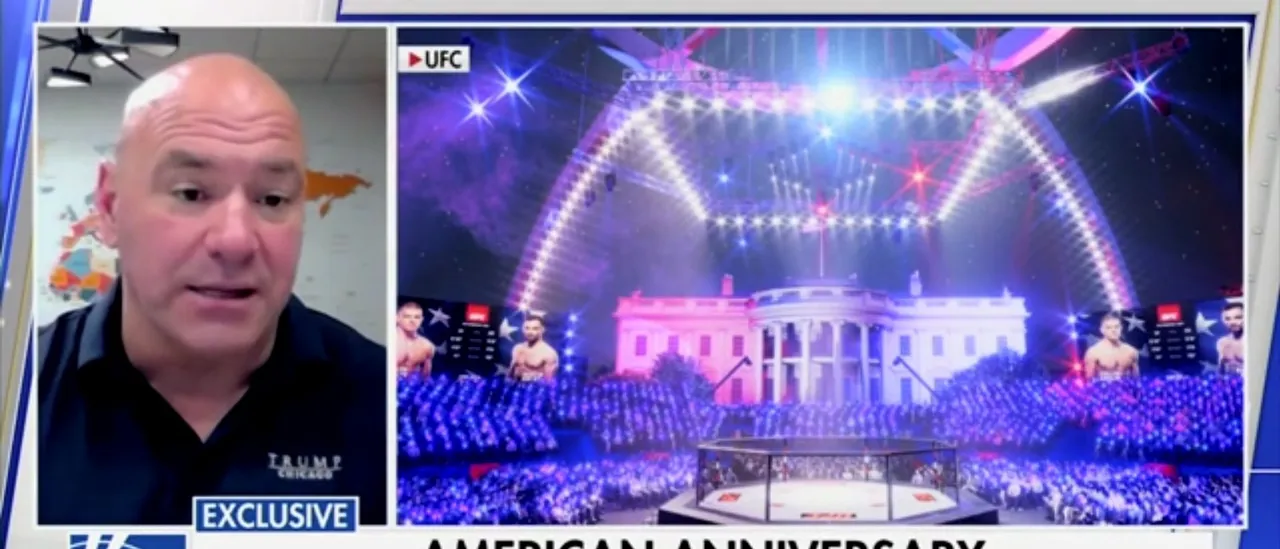
In the world of combat sports, few events carry the geopolitical weight and media hype of a scheduled event at the White House. UFC President Dana White has promised an unprecedented “spectacular” card for June 2026, set to take place on the grounds of the executive mansion in Washington D.C. The goal is clear: to host one of the most significant, high-profile events in the promotion’s history. However, the path to spectacle is being complicated by a sudden and concerning operational challenge: a critical shortage of confirmed marquee talent.
The Presidential Scheduling Dilemma
A flagship event requires flagship athletes. For an occasion intended to generate global headlines beyond the typical mixed martial arts ecosystem, the card demands undeniable star power. Yet, as the calendar advances toward the 2026 date, several primary commercial assets have either signaled unavailability or been strategically eliminated from consideration.
The list of potential absentees presents a tangible operational hurdle for the UFC booking team:
- Conor McGregor: His return remains highly speculative, plagued by delays and uncertainty regarding his commitment and readiness.
- Jon Jones: Despite his status as the undisputed heavyweight champion, Dana White has reportedly rejected his participation plans for the White House event.
- Alex Pereira: The highly marketable Brazilian champion recently indicated he would likely not be available to fight in Washington D.C.
- Ilia Topuria: The dynamic featherweight star is currently on a mandated hiatus due to personal issues, removing another major draw from the equation.
The cumulative effect of these absences is the creation of a major commercial void. A show promised as “spectacular” risks being relegated to merely “standard” without bankable headliners capable of driving mainstream attention to the historic location.
O’Malley: The ‘Suga’ Show Claims Necessity
Amid this talent vacuum, a former Bantamweight Champion, known for his vibrant aesthetic and undeniable drawing power, has stepped into the breach. Sean O’Malley, known as ‘Suga,’ recently articulated the problem facing the promotion and, perhaps more pointedly, his solution.
Speaking on the Red Hawk Recap podcast, O’Malley assessed the thinning roster for the event:
“The White House card has to be — it sounds like it’s happening, and it has to be f****** massive. Who’s — Conor, we don’t know, Jon Jones, doesn’t sound like it’s going to be him, ain’t gonna be Ilia, ain’t gonna be Pereira… They’re running out of (options). They need me, they need the ‘Suga’ show.”
While O’Malley acknowledges his current competitive position—coming off recent losses—he strategically positions his upcoming fight against Song Yadong at UFC 324 as an audition. A standout, commercially explosive performance in that bout, he suggests, would instantly transform him into the essential, non-negotiable star needed to fill the main event spot on the White House lawn. This is a technical assertion of market viability superseding ranking status.
The Draw vs. Meritocracy Conflict: Yan and the Bantamweights
The commercial argument put forth by O’Malley finds support in the analysis of former two-division champion Daniel Cormier, who highlighted the tension between sporting merit and promotional revenue.
The Bantamweight division recently crowned a new champion, Petr Yan, who shocked many by defeating Merab Dvalishvili at UFC 323. By traditional sporting metrics, Dvalishvili—who recently saw his historic winning streak end—warrants an immediate rematch. However, Cormier posited a scenario where O’Malley’s commercial appeal could entirely derail the logical championship path.
Discussing the potential Yan vs. Dvalishvili trilogy on his Good Guy/Bad Guy show, Cormier stated:
“I am telling you, your boy Sean O’Malley, he beats Song Yadong, there will be a little bit of a draw from the company business-wise to go, ‘Maybe, maybe…’ Merab should be fighting for the belt, no question. Sean O’Malley is the biggest star in the weight class, and there will be a draw to say, ‘Hey, why don’t we put O’Malley in there to fight Petr Yan because he’s not gonna get wrestled the whole time?’ But that would feel unfair.”
This statement encapsulates the technical scheduling predicament facing the UFC: when a landmark event demands maximum commercial viability, the operational priority often shifts away from pure sporting fairness. O’Malley`s guaranteed draw against Yan, particularly given the previous competitive history, provides the necessary star power that Dvalishvili, for all his talent, may currently lack in a mainstream setting like the White House.
Conclusion: The Choice for 2026
Dana White’s commitment to delivering a “spectacular” White House event in 2026 is facing genuine headwinds. The high-profile political stage demands established star power, and with the major assets currently unavailable, the promotion must assess its strategic options.
The emerging scenario suggests the main event slot will likely be filled not by the fighter most deserving of a title shot, but by the fighter who generates the largest revenue stream and media attention. For Sean O’Malley, the opportunity to headline the most politically charged card in UFC history hinges entirely on his performance at UFC 324. If he secures a decisive, entertaining victory, the commercial pressure on the UFC to bypass conventional matchmaking and crown the “Suga” Show as their White House headliner may prove irresistible, providing the necessary injection of spectacle Dana White desperately needs.